
Articles
Electronic signatures between Switzerland and the EU: mutual recognition still some way off
1 September 2026
From 1 October 2026, new rules will strengthen Switzerland’s anti-money laundering framework. Businesses will need to take a closer look at their clients, beneficial owners and potential risks in business relationships

The new requirements affect Know Your Customer (KYC) processes, the checks businesses carry out to understand who they are dealing with and assess potential risks. They are based on two pieces of legislation:
Together, they aim to make ownership structures more transparent and extend anti-money laundering obligations to certain activities that were not previously covered to the same extent.
For businesses, one key change is the introduction of new due diligence obligations for certain professional advisers.
From 1 October, certain professional advisory activities will fall within the scope of the AMLA when they meet the legal requirements. This can affect lawyers, fiduciaries, accountants, real estate professionals, corporate service providers and other advisers, depending on the services they provide.
The new rules cover professional involvement in certain transactions. What matters is the activity being carried out, rather than simply the profession or sector. These activities include, among others:
These activities are considered to be carried out on a professional basis if certain thresholds are exceeded:
For advisers that fall within the scope of the revised AMLA, identifying the client is only the beginning.
They must establish the identity of the beneficial owner, understand the purpose and nature of the transaction or business relationship and carry out additional checks where there is an increased risk.
These checks also need to be properly documented and kept traceable.
The new Transparency Act introduces additional obligations for legal entities themselves.
Most Swiss companies covered by the legislation will need to identify and verify their beneficial owners.
A beneficial owner is a natural person. As a general rule, this includes anyone who directly or indirectly controls at least 25% of a company’s capital or voting rights. Control may also exist in other ways, for example through contractual arrangements.
Companies subject to the legislation are responsible for keeping this information accurate and up to date. The register itself is not public and is intended for authorised authorities and other entitled parties.
The new framework also makes clear that KYC does not end with onboarding. Ownership structures, beneficial owners and the risks associated with a business relationship can change over time. Businesses therefore need processes to keep relevant client and ownership information up to date and properly documented.
For companies affected by the new rules, now is the time to review how client information is collected, how beneficial owners are identified, how risks are assessed and where the supporting documentation is stored.
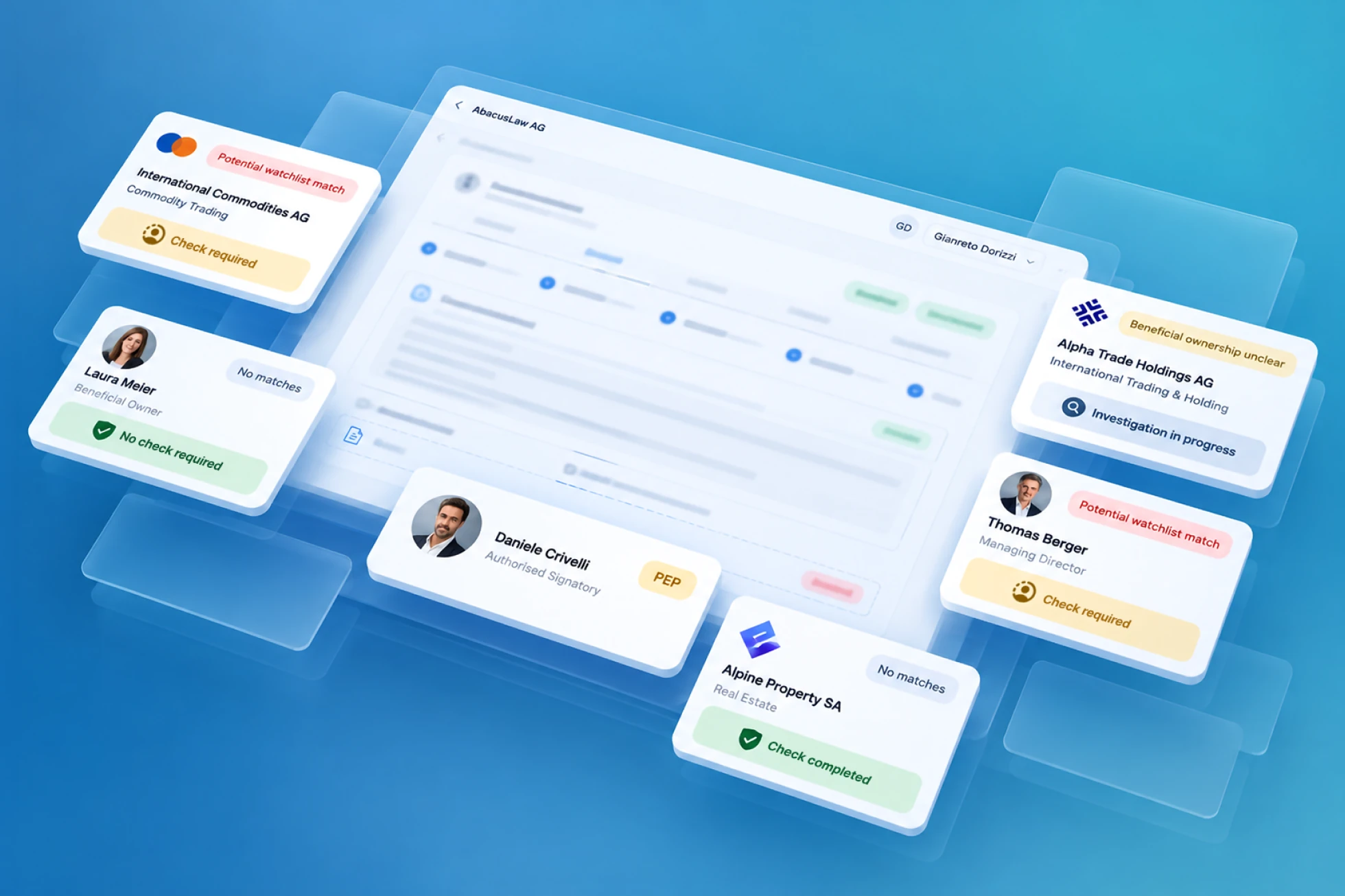
More checks do not necessarily have to mean more complicated processes.
DeepKYC is being developed to bring key KYC steps into one digital workflow, from client onboarding and digital identification to beneficial ownership checks, risk assessment and ongoing reviews.
Through its integration with Abacus ERP and DeepCloud services, DeepKYC aims to make the information required for compliance easier to collect, verify and manage within existing business processes.
Because as KYC requirements evolve, compliance should become more reliable, not more complicated.
Do you want to know how DeepKYC works? Visit the website or contact our team at sales@deepcloud.swiss to request a demo or trial access.
Note: The legal and regulatory obligations that apply to a company depend on its activities and specific circumstances. This article does not constitute legal advice.
Stay updated
Contact
DeepCloud certificates
Information security management for hosting services, in accordance with the Statement of Applicability.

Unattended remote identity proofing with hybrid manual and automated operation according to the international standard ETSI.